keywords:
cold temperatures
gut microbiome
metabolism
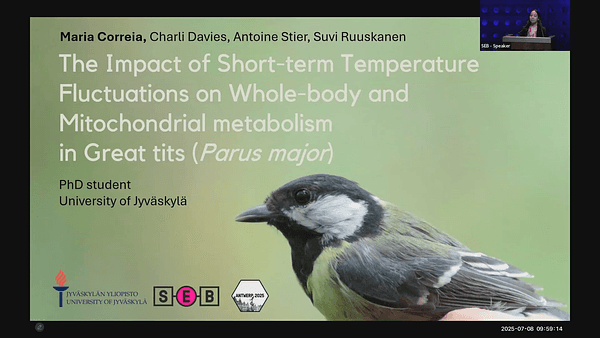
Environmental temperatures affect organism’s physiological responses, and resident birds must adjust to seasonal variations as energy demands increase in low ambient temperatures. The gut microbiome is a key regulator of host physiology that can be influenced by temperature, and aid in host winter adaptation with microbes being able to adapt to environmental changes more rapidly than the host. Previous studies have shown that some gut bacterial taxa exhibit consistent shifts with temperature across animal taxa, specifically cold-exposed birds have higher abundance of Firmicutes which are positively correlated with mitochondrial proton-leak respiration. These bacteria ferment fibre into short-chain fatty acids (SCFA), such as butyrate, that play a role in energy metabolic pathways and could be linked to increased cold tolerance. To investigate the effect of SCFAs on host energy metabolism, wild great tits were supplemented with sodium butyrate for 28 days, while simultaneously exposing birds to either cold (6°C) or warm (20°C) temperatures in captivity. Cold tolerance, overnight whole-body metabolic rate (basal metabolic rate and metabolic rate below thermoneutrality) and mitochondrial function were assessed at the beginning and end of the experiment. We expect that cold-exposed birds will show a higher metabolism compared to warm, as a response to their environment and energy demands, with supplemented birds presenting a higher cold tolerance compared to other individuals. Results from this study could provide insight into the role of SCFAs in host thermoregulation and cold tolerance, ultimately providing information on how the gut microbiome can link to overwintering survival.