2025 AMA Research Challenge – Member Premier Access

October 22, 2025

Virtual only, United States

Would you like to see your presentation here, made available to a global audience of researchers?
Add your own presentation or have us affordably record your next conference.

Background

Veterans of the armed forces are the embodiment of our nation's security and freedom. The health challenges they face are often exacerbated by service-related issues including psychological trauma, excess repetitive noise, radiation exposure, and subjection to dangerous chemicals from Agent Orange, burn pit smoke, water contamination, asbestos, and more. ref PMID: 34070145 Veterans experience a higher prevalence of complex health conditions, including increased risk of heart and lung diseases, diabetes mellitus, and various cancers. ref PMID: 39696828 Providing high-quality equitable care to veterans requires targeted healthcare strategies that address their specific needs.

Methods

To enhance the quality of care provided to our veteran population at Geisinger, we integrated inquiries about military service and health requirements into an 8-question “About Me” questionnaire. This initiative aimed to establish a clearer connection between veterans and the medical services they require. Utilizing the SlicerDicer® tool in the Epic electronic health record system, we analyzed our veteran population to identify prevalent health risks with the goal of using these data to develop targeted care programs.

Results

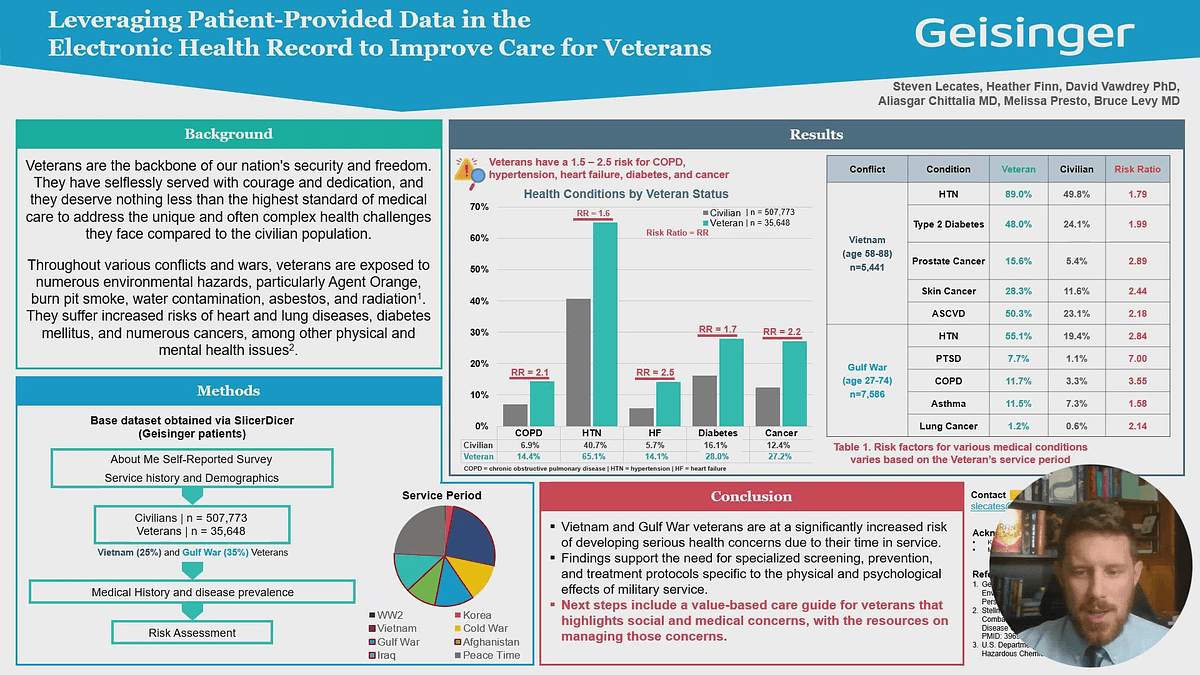
Veterans (n=35,648) had higher overall risk scores for various health conditions compared to the non-veteran population (n=507,773). Specifically, the risk ratios for chronic obstructive pulmonary disease (COPD) were 2.09, for hypertension 1.60, for heart failure 2.47, for diabetes 1.74, and for other cancers 2.19. Among Vietnam veterans (n=5,441), the risk ratios for certain conditions indicated increased vulnerabilities: hypertension at 1.79, type 2 diabetes at 1.99, prostate cancer at 2.89, skin cancer at 2.44, and atherosclerosis at 2.18. Gulf War veterans (1990-present, n=7,586) showed significantly higher relative risks for post-traumatic stress disorder (PTSD) at 7.00, COPD at 3.55, hypertension at 2.84, asthma at 1.58, and lung cancer at 2.14.

Conclusion

Our findings highlight the critical need for tailored healthcare initiatives for Vietnam and Gulf War veterans, who are the most at-risk populations among veterans. These findings support the development of specialized screening, prevention, and treatment protocols that recognize both the physical and psychological effects of military service as seen in previous studies. This information will be used to create a value-based care guide aimed at optimizing care for our veteran population, as many utilize community healthcare facilities outside of the VA, and this fills an urgent gap in educating healthcare teams about veteran health needs.

Downloads

Transcript English (automatic)

Next from 2025 AMA Research Challenge – Member Premier Access

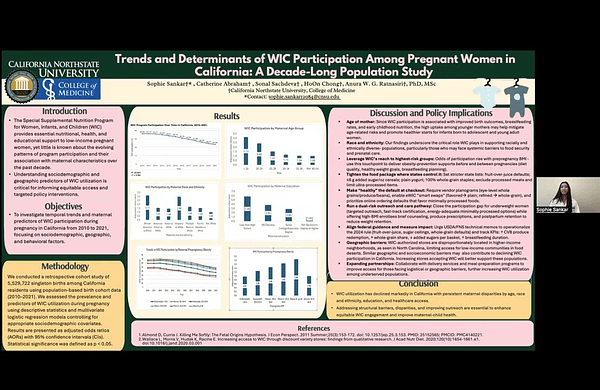
Trends and Determinants of WIC Participation Among Pregnant Women in California: A Decade-Long Population Study

Trends and Determinants of WIC Participation Among Pregnant Women in California: A Decade-Long Population Study

2025 AMA Research Challenge – Member Premier Access

Sophie Sankar

22 October 2025

Stay up to date with the latest Underline news!

Select topic of interest (you can select more than one)

PRESENTATIONS

  • All Presentations
  • For Librarians
  • Resource Center
  • Free Trial
Underline Science, Inc.
1216 Broadway, 2nd Floor, New York, NY 10001, USA

© 2025 Underline - All rights reserved