2025 AMA Research Challenge – Member Premier Access

October 22, 2025

Virtual only, United States

Would you like to see your presentation here, made available to a global audience of researchers?
Add your own presentation or have us affordably record your next conference.

Background

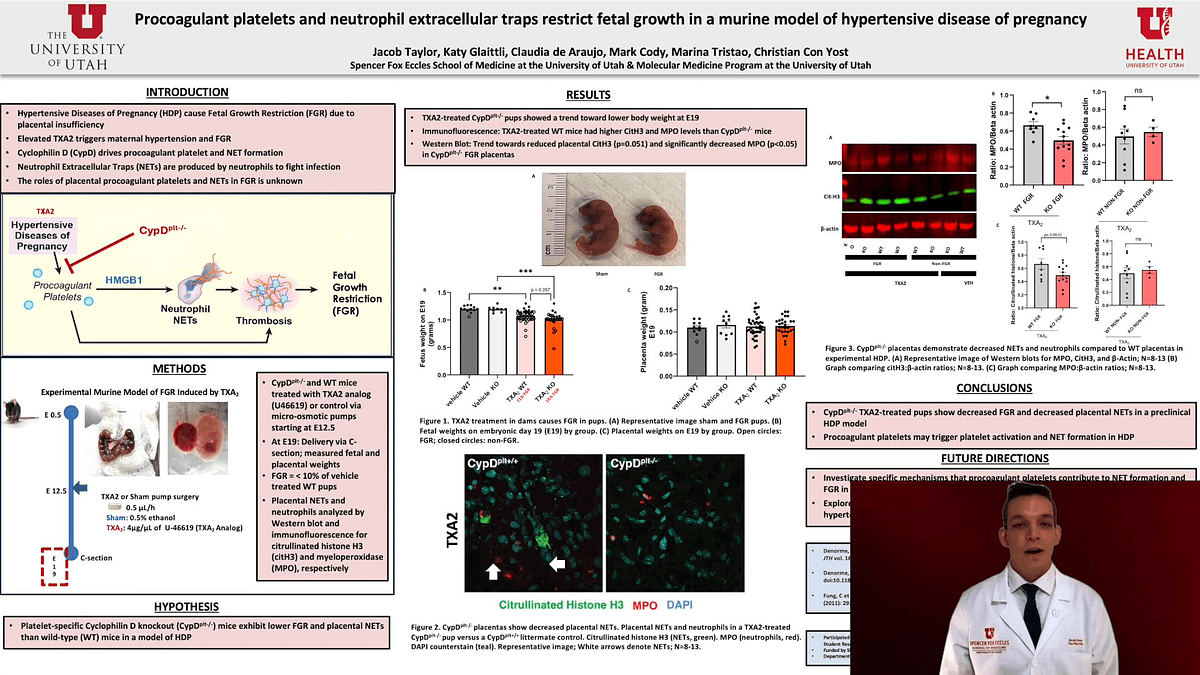
Hypertensive diseases of pregnancy (HDP) like preeclampsia lead to fetal growth restriction (FGR), where elevated thromboxane A2 (TXA2) levels trigger maternal hypertension, recurrent placental ischemia/reperfusion injury, and fibrosis leading to placental insufficiency and FGR. We recently demonstrated a mechanistic link between procoagulant platelets and neutrophils in the innate immune response to ischemia/reperfusion injury following ischemic stroke - neutrophil extracellular trap (NET) formation. To respond to infection or tissue damage, a subset of neutrophils form NETs. These NETs release lattices of decondensed chromatin decorated with antimicrobial factors into the extracellular space. In ischemic stroke, procoagulant platelets induce NET formation leading to pathogenic inflammation which extends infarct size and compromises neurologic recovery after stroke. In the preclinical stroke model, we showed that Cyclophilin-D (CypD) induces procoagulant platelet formation which induced NETs leading to pathogenic inflammation. However, whether procoagulant platelets and NETs mediate FGR in HDP-related placental insufficiency remains unknown. We hypothesized that platelet-specific Cyclophilin D knockout (CypDplt-/-) mice exhibit decreased FGR and placental NET formation compared to wild-type (WT) mice in a preclinical model of HDP.

Methods

Pregnant CypDplt-/- and WT mice received a TXA2 analog (U46619; 4 μg/μL at 0.5 μL/hr continuous infusion) or vehicle control (0.5 μL/hr) via micro-osmotic pumps implanted on embryonic day (E) 12.5. At E19, we measured fetal/placental weights and collected pup plasma. We assessed placental NETs and neutrophil levels via Western blotting of placental homogenates for citrullinated histone H3 (citH3) and myeloperoxidase (MPO), respectively. We assessed pup plasma MPO-DNA complex levels as a surrogate for plasma NET levels using an in-house MPO-DNA ELISA.

Results

Compared to TXA2-treated WT pups, TXA2-treated CypDplt-/- pups showed decreased body weight at E19 (p<0.05), decreased percentage FGR (18% versus 71%), reduced placental MPO (p<0.05), with a trend towards decreased placental citH3 (p=0.051) via western blotting, suggesting decreased placental neutrophils and NETs, respectively, and decreased plasma MPO-DNA complex levels, a surrogate for NET formation (p<0.05). Finally, using a novel NET-inhibitory peptide which we discovered, we demonstrated that NET inhibition in this pre-clinical model decreased FGR in response to TXA2 treatment, a finding correlated with decreased placental (p<0.05) and plasma NET levels (p<0.05), respectively.

Conclusion

CypDplt-/- TXA2-treated pups show decreased FGR and decreased placental NETs in a preclinical HDP model suggesting that procoagulant platelets trigger platelet activation and NET formation in HDP. Further, NET inhibition may represent a novel therapeutic target to decrease fetal growth restriction in human HDP.

Downloads

Transcript English (automatic)

Next from 2025 AMA Research Challenge – Member Premier Access

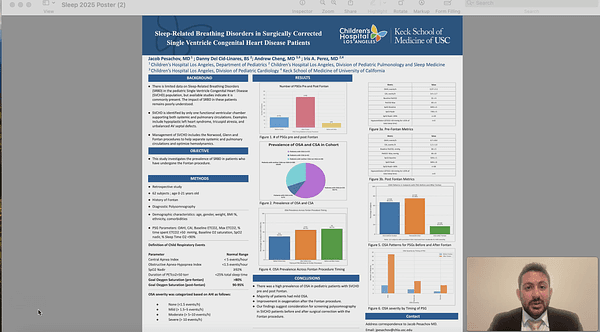
Sleep-Related Breathing Disorders in Surgically Corrected Single Ventricle Congenital Heart Disease Patients

Sleep-Related Breathing Disorders in Surgically Corrected Single Ventricle Congenital Heart Disease Patients

2025 AMA Research Challenge – Member Premier Access

Jacob Pesachov

22 October 2025

Stay up to date with the latest Underline news!

Select topic of interest (you can select more than one)

PRESENTATIONS

  • All Presentations
  • For Librarians
  • Resource Center
  • Free Trial
Underline Science, Inc.
1216 Broadway, 2nd Floor, New York, NY 10001, USA

© 2025 Underline - All rights reserved