Would you like to see your presentation here, made available to a global audience of researchers?
Add your own presentation or have us affordably record your next conference.
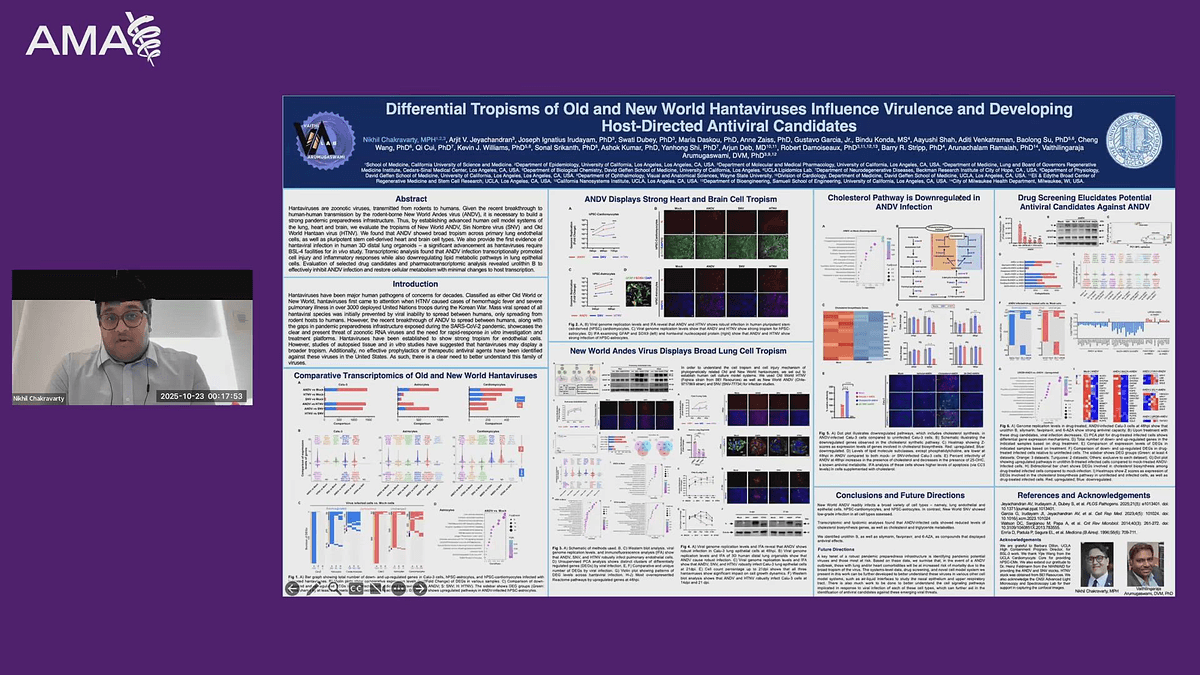
Background Hantaviruses are fatal human pathogens that cause hemorrhagic fevers and are classified into either Old World or New World groups. They are primarily transmitted zoonotically from rodents to humans through the respiratory route, with no currently approved antivirals or widely available vaccines. The Old World Hantaan virus (HTNV), one of the first known hantaviruses, caused cases of hemorrhagic fever and severe pulmonary illness in over 3000 deployed United Nations troops during the Korean War. New World Sin Nombre virus (SNV) is endemic primarily to the United States. The mass spread of these two pathogens was initially prevented by the inability of the virus to spread directly between humans; instead, it spread only from rodent hosts to humans. The recent discovery of the New World Andes virus (ANDV), the first identified hantavirus to spread between humans, necessitates the systematic elucidation of cell tropism, infective potential, and the development of potent therapeutic agents.
Methods In this study, we utilized human primary lung endothelial cells, various pluripotent stem cell-derived heart and brain cell types, and established human lung organoid models to evaluate the tropisms of Old World Hantaan (HTNV) and New World ANDV and Sin Nombre (SNV) viruses.
Results ANDV exhibited broad tropism for all cell types assessed, suggesting that lung and heart comorbidities would increase mortality risk in the event of ANDV outbreaks. SNV readily infected pulmonary endothelial cells, while HTNV robustly amplified in endothelial cells, cardiomyocytes, and astrocytes. Human 3D distal lung organoids effectively modeled these differential tropisms. ANDV infection transcriptionally promoted cell injury and inflammatory responses, and downregulated lipid metabolic pathways in lung epithelial cells. Drug screening and pharmacotranscriptomics revealed that the host-directed small molecule compound urolithin B inhibited ANDV infection and restored cellular metabolism with minimal changes in host transcription.
Conclusion Given the scarcity of academic BSL-4 facilities that enable in vivo hantaviral studies, this investigation presents advanced human cell-based model systems that closely recapitulate host cell tropism and responses to infection, thereby providing critical platforms to evaluate potential antiviral drug candidates.