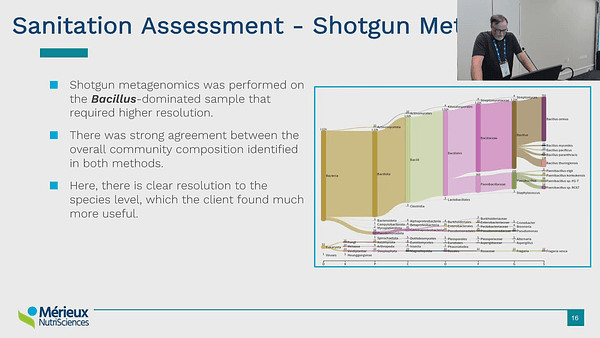
Next generation sequencing platforms have been commercially available for approximately the last twenty years. In that timeframe their use in the food safety sector has steadily increased. While their initial use was centered around sequencing genomes of individual organisms, advances in the technology began to enable the sequencing of entire communities. Since then metagenomics, the study of the structure and function of entire nucleotide sequences isolated from all the organisms in a sample, has created the opportunity to greatly increase detection of adulterants that compromise the safety and quality of foods and supplements. Here we present three case studies where amplicon sequencing or shotgun metagenomics were employed to successfully detect microbial adulterants and quality defects in food and supplement samples. In each case, culture-based and/or existing molecular methods were initially employed and proved to be unable to resolve the issues encountered by each product. We will see how community sequencing approaches were able to provide novel insights where other technologies (e.g., traditional culture-based methods, PCR, qPCR) could not. We will also cover best practices for employing these approaches in diverse food matrices, as well as areas where these approaches will benefit from further innovations.